
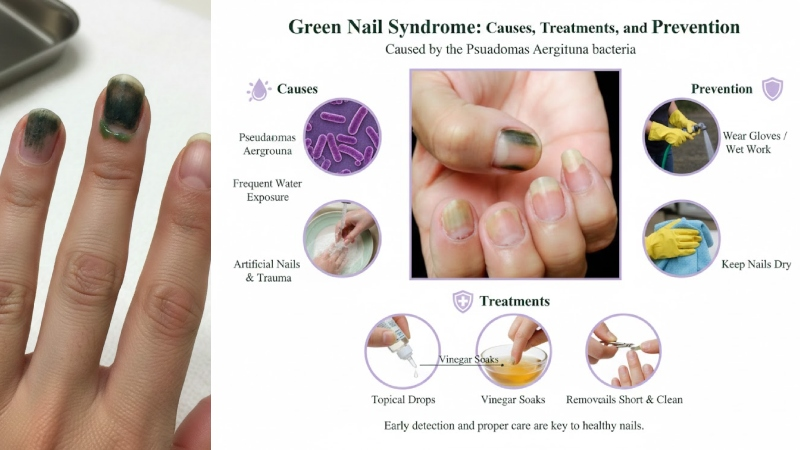
Nail color changes are easy to ignore at first, but when a nail turns green, it quickly becomes a concern. Green nail syndrome is a condition many people experience without understanding what it really is or how serious it can be. The good news is that it is usually mild, treatable, and preventable when handled correctly.
This article explains everything clearly, from causes and risks to treatment options and home remedies.
What Is Green Nail Syndrome?
Green nail syndrome is a nail infection caused mostly by bacteria, not fungus. The main bacteria involved are Pseudomonas aeruginosa. It produces natural pigments that stain the nail green, dark green, or green-black.
The infection develops when moisture becomes trapped under a nail, especially when the nail is lifted or damaged. Most cases affect only one nail on the hands or feet.
Why Does This Condition Develop?
The bacteria responsible for green nails thrive in moist environments. When nails stay wet or damaged for long periods, bacteria can easily grow.
Common causes include:
- Frequent water exposure
- Artificial nails, acrylics, or press-ons
- Nail lifting (onycholysis)
- Nail trauma or tight shoes
- Existing fungal nail infections
- Poor nail drying habits
People working with water daily—such as cleaners, dishwashers, nurses, or gardeners—have a higher risk.
Symptoms You Should Know
Signs may vary from mild to noticeable but usually include:
- Green, yellow-green, or dark green nail color
- Partial nail separation from the nail bed
- Nail thickening or surface changes
- Little to no pain
In mild green nail syndrome, discoloration may be limited and painless, which is why many people delay treatment.
Is Green Nail Syndrome Dangerous?
A common question is: Is green nail syndrome dangerous?
In most healthy individuals, the answer is no.
However, ignoring the infection can worsen nail damage. People with diabetes, weak immunity, or chronic skin conditions should treat it early to avoid complications.
Is Green Nail Syndrome Contagious?
Many worry whether green nail syndrome spreads to others.
It is not contagious. Bacteria naturally exist in the environment and only cause problems when nails remain moist or are damaged.
Green Nail Syndrome Treatment Options
Green nail syndrome treatment depends on the severity of the infection.
Medical treatment may include:
- Trimming away lifted nail areas
- Topical antibiotic drops (gentamicin or ciprofloxacin)
- Antiseptic nail solutions
- Rarely, oral antibiotics for severe cases
Doctors usually diagnose this condition by appearance alone.
How to Treat Green Nail Syndrome at Home?
If you’re wondering how to treat green nails at home, mild cases respond well to simple care.
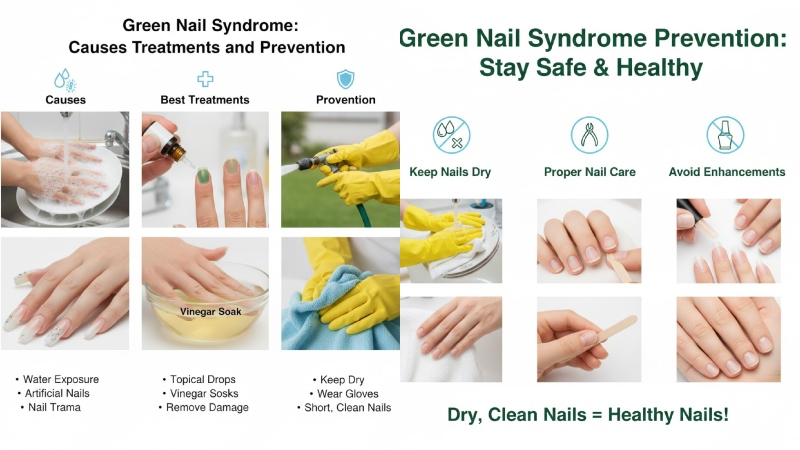
Vinegar Soak Method
- Mix 1 part white vinegar with 4–10 parts water
- Soak the affected nail for 10 minutes
- Repeat twice daily
- Dry the nail completely afterward
Vinegar alters the nail’s environment, naturally inhibiting bacterial growth.
Additional tips:
- Keep nails dry at all times
- Remove artificial nails immediately
- Avoid nail polish during healing
- Trim nails carefully as they grow
These steps help you get rid of green nail syndrome safely over time.
How Long Does Healing Take?
Bacteria usually clear within weeks, but nail color fades only as the nail grows. Fingernails recover faster than toenails, so patience is important.
How to Prevent It From Coming Back?
Prevention is simple but effective:
- Dry hands and feet thoroughly
- Use gloves during wet work
- Avoid long-term nail enhancements
- Treat fungal nail infections early
- Keep nails short and clean
Dry nails do not allow bacteria to survive.
Key Takeaways
Green nail syndrome may look alarming, but it is usually a manageable condition when treated early. Understanding the cause, following proper nail care, and keeping nails dry can prevent long-term damage.
If discoloration spreads, pain develops, or home treatment fails, prompt medical advice should be sought. Healthy nail habits are the best protection. Have questions or tips to share? Reach out anytime for more inspiration.