
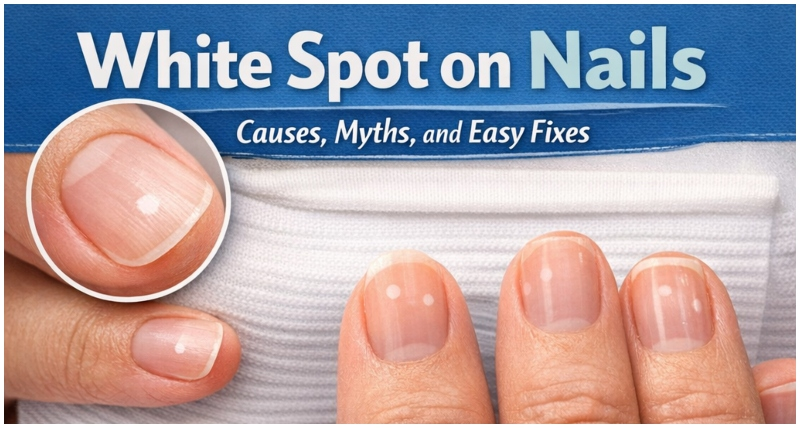
Many people notice small white marks on their fingernails and immediately start wondering what they mean. A white spot on nails is very common and usually harmless, but it can sometimes raise questions about health, nutrition, or nail care habits.
These small marks can appear suddenly and slowly move toward the tip of the nail as it grows. Some people believe the spots indicate a vitamin deficiency, while others think they are caused by injuries. In reality, several factors can lead to these marks.
Understanding the real reason behind a white spot on nails can help you avoid unnecessary worry and take better care of your nails. This guide explains the causes, myths, treatments, and prevention tips to help you maintain healthy, strong nails.
What Does a White Spot on Nails Mean?
In medical terms, a white spot on nails is called leukonychia. It appears as small white dots, lines, or patches on the nail surface. These spots are usually harmless and disappear naturally as the nail grows.
The marks develop when something slightly disturbs the nail matrix, which is the part of the nail responsible for growth. When the nail grows out, the spot moves with it until it is trimmed away. In most situations, these spots are temporary and do not indicate a serious health issue.
Common Causes
Several everyday factors can lead to white spots on nails.
Minor Nail Injury
The most common cause of a white spot on nails is a small injury. This could happen from bumping the nail, pressing it against something hard, or even from aggressive manicures. Often, the injury occurs weeks before the spot becomes visible.
Allergic Reaction
Some nail products contain chemicals that can irritate the nail surface. Nail polish, gel nails, or polish removers may sometimes cause allergic reactions that lead to white spots.
Fungal Infection
Although less common, fungal infections can sometimes cause nail discoloration or white patches. These infections may also cause the nail to become thick or brittle.
Nutritional Factors
Many people believe that white spots always mean a lack of calcium. However, doctors say this is not usually true. In rare cases, a deficiency in zinc or other nutrients may contribute to nail changes.
Common Myths About White Spots
There are several myths surrounding nail health. One of the biggest myths is that every white spot on a nail indicates a calcium deficiency. In reality, most spots are caused by minor injuries rather than diet problems.
Another myth is that these spots appear immediately after damage. In fact, it may take several weeks for the spot to become visible because nails grow slowly. Understanding these myths helps people focus on the real causes instead of worrying unnecessarily.
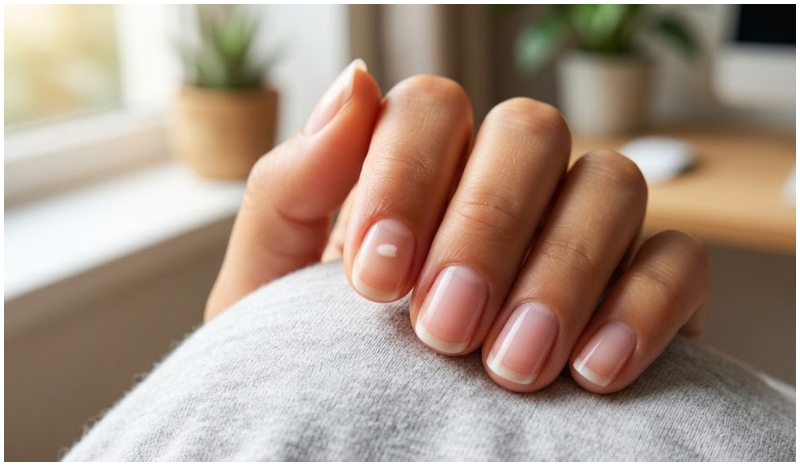
How to Treat White Spots
In most cases, treatment is not required because the spots disappear naturally as the nail grows.
However, there are some steps you can take to support healthy nails.
Let the Nail Grow Naturally
The easiest solution is patience. As the nail grows, the white spot will move upward until it reaches the edge, where it is trimmed away.
Improve Nail Care
Keeping nails clean and trimmed helps prevent damage and supports healthy nail growth.
Eat a Balanced Diet
Healthy nails depend on good nutrition. Foods rich in protein, zinc, iron, and vitamins support stronger nails.
Use Gentle Nail Products
Choosing mild nail care products and avoiding harsh chemicals can reduce the risk of nail irritation.
Prevention Tips for Healthy Nails
Good nail care habits can significantly reduce the risk of developing white spots on nails.
Helpful prevention tips include:
- Avoid biting or picking your nails
- Be gentle during manicures and pedicures
- Wear gloves when using strong cleaning chemicals
- Keep nails moisturized
- Maintain a healthy diet
These simple habits can protect the nail surface and support stronger nail growth.
When to See a Doctor
Most nail spots are harmless, but there are situations when medical advice may be helpful.
You should consider consulting a healthcare professional if:
- White spots appear on many nails at once
- Nails become thick, brittle, or painful
- The color changes to yellow or brown
- The spots do not grow out over time
A doctor can examine the nail and determine whether a fungal infection or another condition is responsible.
Latest Insights About Nail Health
Modern dermatology research shows that nails can reflect overall health and lifestyle habits. Stress, frequent chemical exposure, and poor nail care routines may affect nail appearance.
Experts now emphasize that repeated trauma is the most common cause of white spots on nails, rather than vitamin deficiency. This means that protecting nails from damage is one of the best ways to keep them healthy.
Final Considerations
A white spot on a nail is a common, usually harmless condition that most people experience at some point. These spots are typically caused by small nail injuries or minor irritation rather than serious health problems.
By practicing good nail care, maintaining a balanced diet, and protecting your nails from damage, you can keep them strong and healthy. Most importantly, remember that patience is key because nails naturally grow out and replace themselves over time.
If you notice frequent or unusual nail changes, consulting a professional can help ensure everything is normal. Healthy nails not only improve appearance but also reflect overall well-being.
Looking for something specific? Stay connected for exclusive updates and in-depth content.

Erin Durkheim is an author and content contributor at Gingerbread Nails, covering nail designs, nail care, beauty tips, fashion, and product-related topics. She focuses on creating practical, easy-to-understand content that helps readers explore nail trends, care routines, and everyday beauty ideas.