

In the professional sphere, the strategic precision of visual composition ensures that an image is rarely used exactly as it was captured. Whether preparing a hero banner for a website, an executive headshot, or a product feature for an SEO campaign, the ability to crop an image is a fundamental skill in visual communication. It is the process of removing peripheral noise to ensure that the core message remains the singular focus of the viewer.
Effective cropping is not merely a reduction in size; it is a strategic refinement of the narrative.
The Executive Lens: Why Cropping Dictates Authority
A professional visual must adhere to specific compositional standards to maintain credibility. When you crop an image with intent, you are applying a level of curation that transforms raw data into a polished asset.
- Establishing the Focal Point: By eliminating unnecessary background elements, you guide the audience’s eye directly to the “hero” of the frame. In professional portraiture, this often means adjusting the crop to emphasize the eyes and facial expression, which fosters a sense of trust and engagement.
- Structural Alignment: Cropping allows for the correction of horizontal and vertical planes. A slightly tilted horizon can subconsciously signal a lack of attention to detail; refining the crop ensures that the architecture of the image feels stable and deliberate.
- Contextual Relevance: A wide-angle shot may provide too much environmental context, diluting the impact of the subject. A tight, calculated crop removes these distractions, ensuring the image serves its specific purpose without competing with its surroundings.
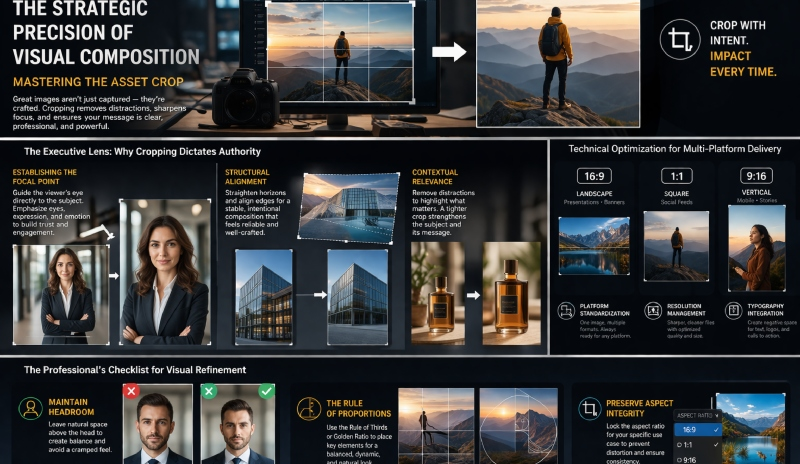
Technical Optimization for Multi-Platform Delivery
In 2026, content must be “liquid,” flowing seamlessly across various digital ecosystems. A sophisticated crop an image utility is essential for meeting the rigid aspect ratio requirements of modern platforms:
- Platform Standardization: Each professional network has its own “safe zones.” Utilizing a crop tool allows you to transition a single high-resolution asset into a $16:9$ landscape for presentations, a $1:1$ square for social feeds, or a $9:16$ vertical for mobile-first storytelling.
- Resolution Management: While cropping reduces the overall pixel count, it increases the “perceived quality” by removing blurred edges or sensor noise at the periphery. This results in a tighter, sharper file that loads efficiently while maintaining visual impact.
- Typography Integration: For digital marketing assets, cropping is vital to create “negative space.” By shifting the subject to one side of the frame, you create a clean canvas for text overlays, calls to action, or brand logos without cluttering the composition.
The Professional’s Checklist for Visual Refinement
To achieve a result that aligns with corporate branding and high-level design standards, consider the following technical pillars:
- Maintain Headroom: In professional headshots, avoid cropping too close to the top of the scalp. A natural margin of space at the top of the frame prevents the image from feeling claustrophobic.
- The Rule of Proportions: Utilize the Golden Ratio or the Rule of Thirds to create a dynamic yet balanced composition. Placing key elements along these intersections creates a more “expensive” and aesthetically pleasing look than simple centering.
- Preserve Aspect Integrity: When cropping for a specific use case, lock the aspect ratio. This prevents the distortion of the subject and ensures that the final export remains consistent with the technical requirements of the host site.
Conclusion
Ultimately, the decision to crop an image is an exercise in editorial judgment. It is the final opportunity to remove the “accidental” and emphasize the “intentional.” By mastering the art of the crop, you ensure that every visual asset you publish is a precise, high-impact reflection of your professional standards.
Want to learn more? Contact us anytime for new updates and information.