
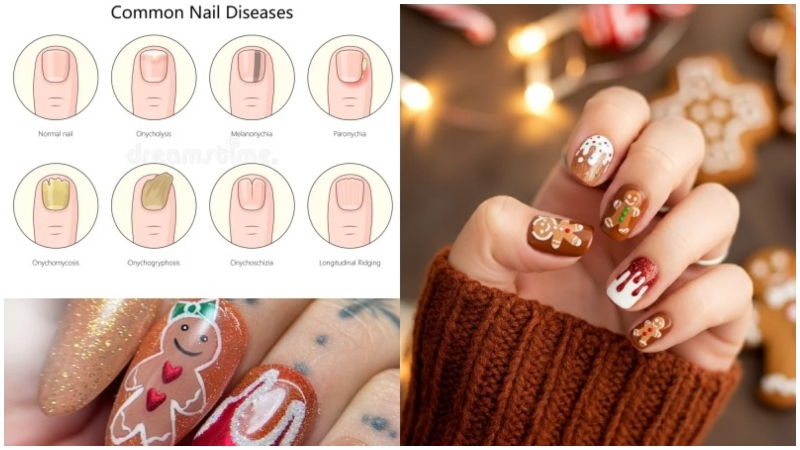
Have you noticed your nails looking thick, brittle, or oddly shaped, almost like the rough colour of gingerbread? Maybe they break easily, feel uncomfortable, or just don’t look healthy. Many people call this “gingerbread nails disease.”
This isn’t a real medical name, but the nail changes it describes are very real. Your nails can be an early sign of infections, immune system issues, or other health problems.
In this article, we’ll explain three common nail problems that can make nails look like this, why they happen, and the best ways to treat them.
1. Fungal Nail Infection
The most common reason for unhealthy nails is a fungal infection.
Signs of a Fungal Infection
- Nails turn yellow, brown, or even green.
- They get thick, rough, and may lift off the skin.
- Toenails are affected more often, since shoes trap sweat and moisture.
Why does it happen?
Fungus enters through tiny cracks in the nail or skin. Risk goes up if you:
- Walk barefoot in public showers.
- Wear tight or sweaty shoes.
- Have athlete’s foot or weak immunity.
How to Treat It?
- See a doctor first. They can confirm if it’s a fungus.
- Antifungal tablets (like terbinafine) are the most effective, but need monitoring.
- Antifungal creams or medicated nail polish may help in mild cases.
- Keep feet clean and dry, trim nails regularly, wear breathable shoes, and change socks often.
Be patient: It can take months for new, healthy nails to grow after treatment.
2. Psoriatic Nail Disease
If you already have psoriasis (a skin or joint condition), your nails may also be affected.
Signs It’s Linked to Psoriasis
- Small dents (pits) on the nail surface.
- Yellow-red patches under the nail (“oil drop” sign).
- Nails may thicken, break, or separate from the skin.
Why does it happen?
Psoriasis is an autoimmune disease where the body’s defence system attacks healthy skin and nails. This causes abnormal nail growth.
How to Treat It?
- Creams or ointments (steroid or vitamin D-based) can reduce swelling.
- In severe cases, doctors may give stronger medicines that calm the immune system.
- Take care of your nails: keep them short, avoid biting or picking, and protect them from injury.
3. Leukonychia (White Spots on Nails)
Sometimes nail changes look scary, but are harmless. A common example is leukonychia, which causes white spots or streaks.
Signs of Leukonychia
- Small white dots or lines on the nail.
- Usually painless and harmless.
Why does it happen?
- Small nail injuries (like hitting a finger).
- Sometimes due to allergic reactions, medicines, or — rarely — health issues such as kidney or liver problems.
Treatment
- Most of the time, no treatment is needed. The spots grow out naturally.
- If spots keep coming back or affect many nails, see a doctor to check for other causes.
Easy Tips for Healthier Nails
No matter what condition you have, these simple habits help:
- Keep nails clean and dry.
- Cut nails straight across.
- Don’t bite, pick, or peel them.
- Wear gloves when cleaning or working with water.
- Wear breathable shoes and change socks daily.
- If nail problems don’t go away, get medical advice.
When to See a Doctor
You should see a doctor if:
- Your nails cause pain.
- They are very thick, deformed, or hard to cut.
- You also have skin rashes, joint pain, or repeated infections.
- Home remedies aren’t working.
Final Thoughts
“Gingerbread nails disease” may not be an official term, but the nail problems behind it are real. The most common ones are:
- Fungal nail infections
- Psoriatic nail disease
- Leukonychia (white spots)
Most nail issues can be treated if you act early. Remember, healthy nails aren’t just about beauty; they show your overall health. If something looks unusual, don’t ignore it.
Have questions or feedback? For more updates, contact us anytime.