
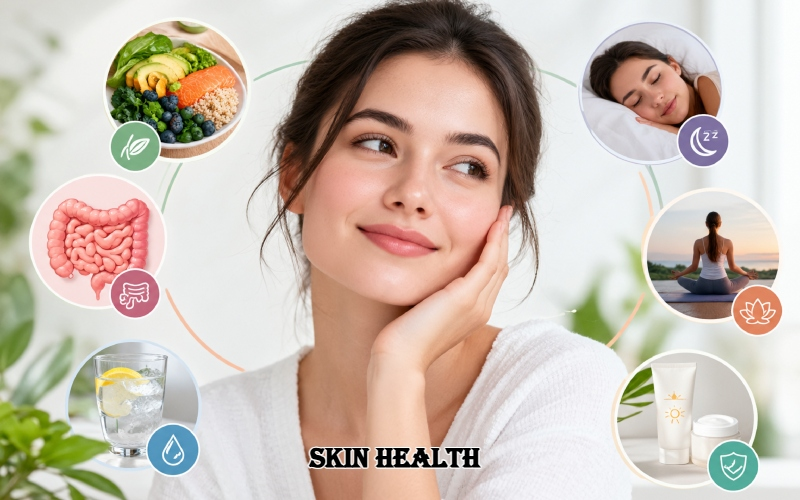
Most people think of their skin as a surface problem. A breakout appears, a patch of redness shows up, and the instinct is to reach for a topical product and move on. But the skin is far more than a cosmetic layer. It is a living, communicating organ that reflects what is happening throughout the entire body, and treating it well means understanding that connection.
The Skin as a Window Into Systemic Health
Dermatologists have long recognized that certain skin conditions point toward deeper internal issues. Chronic inflammation in the skin rarely stays confined there. The skin is one of the largest immune organs, involving innate and acquired immune systems, and is able to respond to internal and exogenous stimuli, producing a large amount of inflammatory cytokines that result in systemic inflammation.
That systemic reach has real consequences. Patients with psoriasis are up to 50% more likely to develop cardiovascular disease, and this cardiovascular risk increases with skin severity. This is not a coincidence or a side effect of medication. It reflects shared inflammatory pathways between what is happening on the skin and what is happening in the arteries. Stop treating skin health as separate from overall health. They are part of the same system.
The Gut-Skin Axis: A Two-Way Conversation
One of the most compelling areas of current research is the relationship between the gut and the skin. The concept of the “gut-skin axis” refers to the bidirectional relationship between the gut microbiome and skin health, with several mechanisms, including intestinal barrier function, inflammatory mediators, and metabolites, proposed as pathways. In plain terms, what happens in the digestive system does not stay there.
How Gut Imbalance Shows Up on the Skin
The human intestine hosts diverse microbial communities that play a significant role in maintaining gut-skin homeostasis. When the relationship between the gut microbiome and the immune system is impaired, subsequent effects can be triggered on the skin, potentially promoting the development of skin diseases. Conditions like acne, rosacea, atopic dermatitis, and psoriasis have all been studied in relation to gut microbiota composition.
Diet as a Driver
Changes in gut microbial communities can trigger an immunological response, resulting in conditions including allergies, acne vulgaris, atopic dermatitis, alopecia areata, rosacea, hidradenitis suppurativa, and other skin diseases. Diet is one of the primary levers influencing microbial diversity. What someone eats has a measurable downstream effect on how their skin behaves.
Dysbiosis and Inflammation
Dysbiosis, defined as an imbalance in the composition of microbial populations, has been linked to an increased predisposition to inflammatory skin disorders, including psoriasis, atopic dermatitis, and rosacea. This points to the gut-skin axis as a central pathway in the development of these conditions. The inflammation does not originate at the skin. It often arrives there.
Lifestyle Factors That Affect Both Systems at Once
Because the skin and the body’s internal systems are so intertwined, certain lifestyle habits improve both simultaneously. Sleep, stress management, hydration, and anti-inflammatory nutrition all influence skin clarity and systemic health markers at the same time.
Chronic stress, for example, elevates cortisol, which disrupts the skin barrier, impairs wound healing, and suppresses immune regulation. Poor sleep produces a similar cascade. These are not abstract wellness talking points. They are physiological processes with visible results on the skin.
This is also where professional skin treatments become relevant, not as vanity indulgences but as part of a broader approach to skin integrity. A hydrafacial works by deeply cleansing, exfoliating, and infusing the skin with targeted serums, supporting the barrier function that stress and environmental exposure routinely degrade.
Skin Conditions Are More Common Than Most People Realize
The scale of skin disease in the United States is significant, affecting people across all ages and backgrounds. In 2021, the prevalence of atopic dermatitis was 7.3% in U.S. adults, and by 2024 that figure had risen to 7.6%, with approximately 19.8 million American adults affected. That is a substantial portion of the population managing a chronic inflammatory condition that, as the research shows, often connects to broader immune and systemic patterns.
That number matters. It signals that skin health is a public health issue, not a niche concern. And because inflammatory skin conditions are tied to systemic inflammation, addressing them thoughtfully has implications well beyond appearance.
What a Whole-Body Approach to Skin Health Looks Like
Treating skin well in the long term requires looking beyond the surface. A few practical principles guide this:
- Reduce systemic inflammation through diet. Prioritize whole foods, fiber, and omega-3 fatty acids, all of which support gut microbiome diversity and reduce the inflammatory signals that reach the skin.
- Protect the skin barrier consistently. Barrier disruption allows pathogens in and moisture out. Gentle cleansing, appropriate moisturization, and sun protection all contribute to barrier integrity.
- Address stress as a skin variable. Stress is not a soft factor. It has direct hormonal and immune effects on the skin, and managing it is as relevant to skin health as any topical routine.
- Work with professionals who understand context. A provider who considers overall health history, not just the presenting skin concern, is better positioned to identify patterns and recommend treatments that address root causes.
- Be consistent over time. Skin health responds to sustained habits far more than to occasional intensive interventions.
Conclusion
The science connecting skin health to systemic health is only growing more detailed. As research into the gut-skin axis, immune regulation, and inflammatory pathways continues to develop, the approach to skin care will increasingly resemble the approach to general health: comprehensive, consistent, and attentive to the whole person. Paying attention to the skin is not superficial. It is one of the clearest signals the body sends.

Erin Durkheim is an author and content contributor at Gingerbread Nails, covering nail designs, nail care, beauty tips, fashion, and product-related topics. She focuses on creating practical, easy-to-understand content that helps readers explore nail trends, care routines, and everyday beauty ideas.