
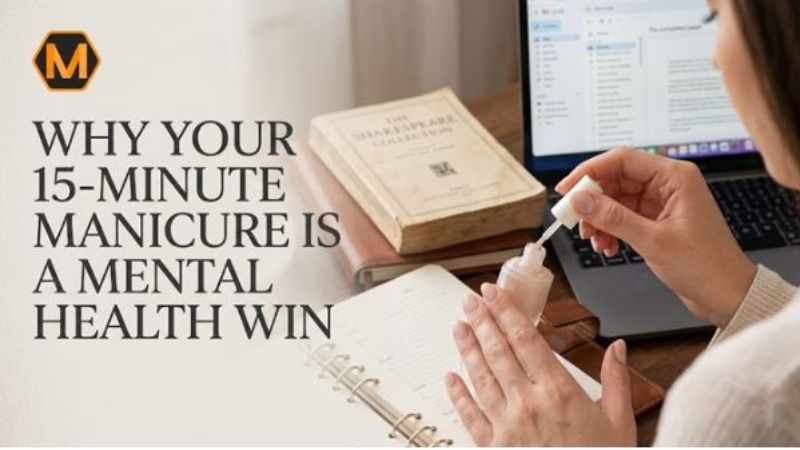
The modern university experience is a relentless cycle of digital notifications, high-stakes testing, and the constant pressure of academic performance. For most students, the day starts with an alarm and ends with a blue-light glow, leaving very little room for physical presence. Amidst this chaos, the simple act of sitting down for a 15-minute manicure has emerged as a radical act of self-preservation, making the 15-minute manicure a powerful mental reset for students. It is not merely about aesthetic appeal or following the latest “aura nail” trends on campus; it is a tactical reset for the human nervous system. In an age where our attention is the most valuable commodity, choosing to stay still for fifteen minutes is a profound way to reclaim your mental clarity and emotional balance.
The psychological weight of a full-time degree often leads to “Cognitive Overload,” a state where the brain’s prefrontal cortex becomes so saturated with data that it loses the ability to process new information effectively. This is where strategic delegation becomes a survival skill. Many students find that they can maintain their GPA and their sanity by choosing to buy expository essay services from myassignmenthelp for their most labor-intensive projects.
The Science of Somatic Grounding and Cognitive Reset
In 2026, educational psychology has placed a significant emphasis on “Somatic Grounding”—the practice of using physical sensations to interrupt the “fight or flight” response triggered by academic stress. A manicure serves as a perfect sensory-friendly intervention. The tactile experience of the cool polish, the rhythmic sound of filing, and the focused attention on a single, physical task work together to activate the parasympathetic nervous system. This “rest and digest” mode slows the heart rate and lowers cortisol levels, which are often chronically elevated in students facing tight deadlines.
Research into “micro-breaks” confirms that even a ten-minute detachment from cognitive tasks can lead to a 15% increase in subsequent focus levels. When you step away from your desk to focus on the micro-details of a manicure, you are allowing your brain’s “Default Mode Network” (DMN) to take over. This is the state where spontaneous problem-solving occurs and where disparate ideas finally click into place. It is a necessary phase of the learning cycle that many students skip in favor of the “all-nighter” grind.
Bridging the Gap Between Wellness and High-Level Humanities
This mental “defragging” is particularly crucial when moving between different modes of thinking. After a long morning of data-heavy statistics or chemistry labs, your brain needs a transition period before it can tackle the nuanced interpretation required for high-level humanities. For example, a student might be preparing for The Ultimate Character Analysis of Mark Antony in Julius Caesar, a task that demands deep emotional intelligence and an understanding of complex Roman rhetoric.
Table 1: The Student Wellness Reset Menu (15-Minute Options)
| Activity | Primary Benefit | Cognitive Impact | Best Used For… |
| 15-Min Manicure | Tactile Grounding | Pattern Interrupt | Post-Lab or Pre-Writing Reset |
| Diaphragmatic Breathing | Vagus Nerve Activation | Lowered Cortisol | Immediate Exam Anxiety |
| Desk-Based Yoga | Muscle Tension Release | Increased Circulation | Mid-Study Session Slump |
| Digital Detox Walk | Sensory Variety | DMN Activation | Overcoming Writer’s Block |
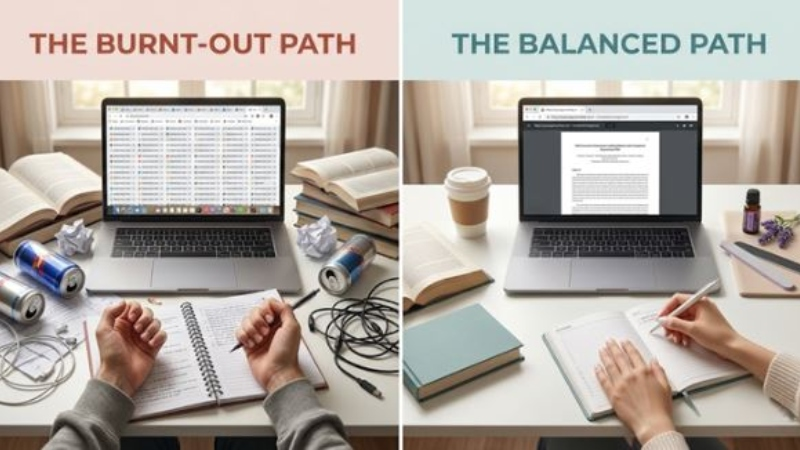
>>>>>>>>>>>>>Without a somatic reset like a manicure, your brain may still be stuck in “analytical mode,” making it difficult to grasp the subtle persuasive power of Antony’s funeral oration. By stepping into a wellness ritual, you clear the “cache” of your working memory. This allows you to approach the character of Antony not just as a name on a page, but as a living study of loyalty, manipulation, and power. The result is a more profound, professional-grade analysis that stands out in a sea of generic student responses.
Diagram: The Cognitive Load & Recovery Cycle
Level 1: High Cognitive Load (Intense Research, Thesis Drafting, Coding)
↓
Level 2: Vigilance Decrement (Accuracy drops, stress rises, “Brain Fog” sets in)
↓
Level 3: The Pattern Interrupt (15-Minute Manicure, Sensory Grounding, Tea Ritual)
↓
Level 4: Synaptic Reset (DMN activation, cortisol drop, memory consolidation)
↓
Level 5: Peak Performance (Return to study with 20% higher retention and focus)
Embracing “Slow Productivity” in a Fast-Paced Semester
We are currently witnessing a shift toward “Slow Productivity” among top-tier university students. This philosophy argues that true achievement comes from consistent, high-quality effort rather than sporadic, high-stress bursts. A manicure is a micro-commitment to this philosophy. It teaches you to value the process over the product and to understand that your physical well-being is the engine that drives your academic success.
This strategy works most effectively when you view your semester as a marathon of energy management. By creating “sanctuary points” in your schedule—such as a weekly nail care session—you create a predictable rhythm that provides a sense of control. In an environment where professors, exams, and social pressures are all competing for your energy, having a ritual that is “just for you” is incredibly empowering. It builds psychological resilience, making you less likely to crumble when a difficult week inevitably arrives.
The Role of Professional Support in a Balanced Life
The most successful students in 2026 are not the ones who do everything themselves; they are the ones who manage their resources most effectively. Just as a professional artist might use high-grade tools or a specialized assistant to handle the base layers of a mural, a student uses professional writing support as a strategic tool. Utilizing myassignmenthelp allows you to focus on the high-impact parts of your education—the networking, the internships, and the deep-dive learning—while the technical, time-consuming drafts are handled with professional precision.
This level of organization is what separates a stressed student from a student leader. When you aren’t drowning in the “busy work” of multiple 3,000-word essays, you have the emotional bandwidth to engage with your campus community and pursue your passions. You have the time to care for your appearance, your mental health, and your social connections.
A Final Word on Holistic Success
Ultimately, the 15-minute manicure is a symbol of a larger truth: your value is not solely defined by your output. While your GPA is a key part of your future, it is your ability to stay grounded, healthy, and focused that will define your career in the long term. By integrating somatic wellness, utilizing professional academic tools, and embracing a human-centric approach to productivity, you aren’t just surviving university—you are mastering it.
Next time you feel the weight of a dozen deadlines pressing down on you, don’t reach for another cup of coffee. Instead, reach for a file and a bottle of your favorite shade. Give your brain the 15-minute manicure it needs to reset, and you’ll find that the “mountain” of work in front of you suddenly looks a lot more like a manageable hill. Success in 2026 is about finding the “glow” in the grind, and sometimes, that glow starts at your fingertips.
Frequently Asked Questions
- How does a short beauty ritual actually reduce stress?
Focusing on a physical, tactile task like a manicure serves as a “pattern interrupt” for the brain. It shifts your nervous system from a high-alert state to a relaxed mode by grounding your senses in the present moment, which lowers cortisol and clears mental fog.
- Can fifteen minutes really make a difference in my productivity?
Yes. Science shows that “micro-breaks” are essential for memory consolidation and focus. Taking a brief, intentional step away from your screen allows your brain to reset, leading to higher retention rates and sharper critical thinking when you return to your work.
- What is the best way to manage a heavy academic workload without burning out?
The most effective approach is a combination of “Slow Productivity” and smart resource management. This involves breaking tasks into smaller chunks, prioritizing self-care rituals to maintain mental energy, and knowing when to delegate complex or time-consuming projects to professional experts.
- Why is “Somatic Grounding” important for university students?
Students often experience “Cognitive Overload” from constant digital engagement. Somatic grounding techniques—using touch, scent, and physical movement—help anchor the mind in the body. This reduces the physical symptoms of anxiety and builds the psychological resilience needed for long-term academic success.
About The Author
>>>>>>>>>>>>Thomas Taylor is an experienced content strategist and academic researcher who specializes in bridging the gap between student lifestyle and educational excellence. Representing myassignmenthelp, Thomas focuses on providing actionable insights that help university students balance their rigorous coursework with sustainable wellness habits. He is dedicated to creating human-centric guides that empower the next generation of professionals to achieve their goals with clarity and confidence.
For more information and future updates, feel free to reach out anytime.

Erin Durkheim is an author and content contributor at Gingerbread Nails, covering nail designs, nail care, beauty tips, fashion, and product-related topics. She focuses on creating practical, easy-to-understand content that helps readers explore nail trends, care routines, and everyday beauty ideas.