
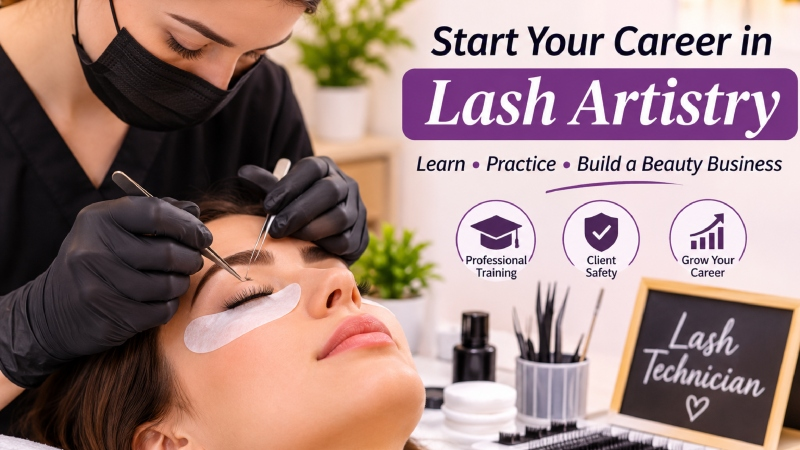
Have you ever considered turning your passion for beauty into a rewarding career? Eyelash extensions have become a popular beauty service, offering clients a way to enhance their natural lashes while giving aspiring beauty professionals an opportunity to develop a specialised skill. With the right training, dedication and creativity, lash artistry can become a valuable addition to your beauty career or the foundation of your own business.
Whether you are completely new to the beauty industry or already working as a beautician, learning professional lash application techniques can open doors to new opportunities. Enrolling in an eyelash extension course is a practical starting point for developing the knowledge and confidence needed to provide this service professionally.
The beauty industry also offers opportunities for people who enjoy working directly with clients. According to the Australian Government’s Jobs and Skills Australia, approximately 28,900 people are employed as beauty therapists. Its occupational profile also recognises eyelash technicians as a specialisation within the beauty therapy profession. This demonstrates how specialised beauty services can form part of a broader career in the industry.
So, what does it take to become a skilled lash technician, and how can professional training help you get started?
1. Understand the Basics of Eyelash Extensions
Before beginning your journey as a lash technician, it is important to understand what eyelash extensions are and how they work.
Eyelash extensions are semi-permanent fibres individually attached to a client’s natural eyelashes using a specially formulated adhesive. Unlike temporary strip lashes, professional extensions are designed to remain in place as the natural lashes go through their normal growth and shedding cycle.
The goal is to enhance the appearance of the eyes while maintaining the health and condition of the natural lashes.
There are several popular eyelash extension styles, including:
- Classic lashes: One extension is applied to one suitable natural lash, creating a clean and natural-looking finish.
- Volume lashes: Lightweight extensions are formed into fans and applied to individual natural lashes to create a fuller appearance.
- Hybrid lashes: A combination of classic and volume techniques, offering a balance between natural definition and added fullness.
- Wispy lashes: A textured style featuring different extension lengths to create a more noticeable, feathered appearance.
Each technique produces a different result, and the best option depends on the client’s natural lashes, eye shape and preferred look.
Understanding these differences is an important part of becoming a professional lash technician. It allows you to recommend suitable styles rather than simply following beauty trends.
2. Learn the Essential Skills of a Professional Lash Technician
Successful lash application involves much more than attaching extensions to natural eyelashes. It requires precision, patience, product knowledge and a thorough understanding of eye safety.
Professional training helps beginners develop the foundational skills needed to perform treatments with greater confidence.
Some of the essential skills include:
- Lash isolation: Separating individual natural lashes to prevent extensions from sticking together.
- Extension placement: Positioning each extension correctly to achieve a consistent and comfortable result.
- Lash mapping: Planning the lengths and curls needed to create a particular design.
- Adhesive control: Understanding the appropriate amount of adhesive and how environmental conditions can affect its performance.
- Lash styling: Selecting suitable extensions based on the client’s natural lashes and desired appearance.
- Refill techniques: Maintaining existing extensions by replacing those that have naturally shed.
An experienced lash technician also understands that every client has different requirements.
For example, a client with naturally fine lashes may need a lighter extension design than someone with stronger natural lashes. Applying extensions that are too heavy can place unnecessary stress on natural eyelashes.
Developing these skills through structured learning can help you deliver more consistent results and improve the overall client experience.
3. Understand the Importance of Hygiene and Client Safety
Client safety should always be a priority when performing beauty treatments, particularly when working around the eyes.
The eye area is delicate, and poor application practices can result in irritation, discomfort or other complications. This is why hygiene and infection prevention should be treated as essential professional responsibilities.
A trained lash technician should understand how to:
- Clean and disinfect reusable tools according to appropriate instructions.
- Wash or sanitise hands before and after every appointment.
- Prepare a clean and organised treatment area.
- Use fresh disposable applicators and other single-use materials where required.
- Store adhesives and other products according to manufacturer recommendations.
- Check for contraindications before beginning a treatment.
- Recognise when a client should be referred to an appropriate health professional.
Client consultations are equally important. Before an appointment, ask about relevant allergies, previous reactions, eye conditions and other factors that could affect the treatment.
Patch testing should be conducted in accordance with product instructions and relevant professional guidance. However, clients should also understand that a patch test cannot guarantee that an allergic reaction will not occur.
A professional approach means knowing when not to proceed with a treatment. If a client experiences unusual redness, swelling, pain or irritation, the application should not continue, and appropriate medical advice may be necessary.
4. Become Familiar with Lash Tools and Products
Having the right equipment makes a significant difference to the application process.
A beginner lash technician should become familiar with the tools and materials used in professional treatments. Understanding their purpose helps prevent unnecessary mistakes and makes the working process more efficient.
Some commonly used supplies include:
- Lash extensions: Available in different lengths, curls, thicknesses and materials.
- Precision tweezers: Used for isolating natural lashes and picking up extensions.
- Lash adhesive: Specially formulated for professional eyelash extension applications.
- Under-eye pads: Used to protect and separate the lower lashes during treatment.
- Lash cleanser: Helps remove makeup, oil and debris before application.
- Microbrushes: Used for precise product application and preparation.
- Disposable mascara wands: Used for brushing and separating lashes.
- Lash tape: Helps secure lower lashes and improve visibility during application.
- Lash remover: Used to remove extensions safely according to product instructions.
Product selection is particularly important because not all adhesives and extension materials are suitable for every situation.
For example, adhesive performance can be affected by temperature and humidity. Lash technicians must understand the manufacturer’s recommendations and work within the appropriate conditions.
Keeping equipment organised and maintaining a clean workstation also creates a more professional environment for clients.
5. Develop Your Lash Mapping and Styling Techniques
One of the most creative aspects of lash artistry is designing a look that complements each client’s eyes.
Lash mapping involves planning the extension lengths, curls and placement before beginning the application. It helps technicians create balanced results and avoid applying the same design to every client.
Some popular styling approaches include:
- Doll-eye style: Generally uses longer extensions towards the centre of the eye to create a more open appearance.
- Cat-eye style: Uses gradually increasing lengths towards the outer corners for an elongated effect.
- Natural style: Follows the natural lash line to create subtle enhancement.
- Open-eye style: Uses carefully selected lengths around the centre to emphasise the appearance of the eyes.
When choosing a design, consider the client’s natural lash condition, eye shape and personal preferences.
For example, someone who wants an understated everyday look may prefer classic extensions, while a client looking for more noticeable volume might choose a hybrid or volume design.
Learning to customise lash styles helps you move beyond basic application and develop your own professional approach.
6. Choose Professional Training to Build Your Confidence
If you are serious about becoming a lash technician, learning from reliable educational resources is an important first step.
Although online videos and beauty tutorials can introduce you to different techniques, they should not replace structured training. Professional education gives you a more organised understanding of the procedures, safety considerations and technical skills involved.
An eyelash extension course can help aspiring technicians understand the foundations of lash artistry and work towards developing the practical knowledge needed for professional treatments.
When comparing training options, consider the following:
- Course content: Look for training that covers lash anatomy, extension types, application methods, hygiene and client safety.
- Learning resources: Check whether the programme provides demonstrations, written materials and opportunities to practise.
- Assessment requirements: Understand how your knowledge and practical skills will be evaluated.
- Certification: Find out what certificate or statement of completion is awarded and what it represents.
- Student support: Consider whether you can access guidance when you need help understanding a particular technique.
- Training flexibility: Choose a learning arrangement that suits your existing work and personal commitments.
It is also worth checking whether additional practical experience, insurance or local requirements apply before offering treatments to paying clients.
Remember that completing a training programme is only the beginning. Developing consistent application skills requires continued practice, feedback and a commitment to professional standards.
7. Practise Your Techniques Before Working with Clients
Like any hands-on beauty service, lash application takes time to master.
Even after completing your training, you should dedicate time to practising the techniques you have learned. Consistent practice helps improve hand control, precision and familiarity with the equipment.
Beginners can start by practising on training mannequins or artificial lash strips before progressing to appropriate supervised practical work.
Focus on improving the following areas:
- Holding tweezers comfortably and maintaining control.
- Separating individual lashes without disturbing neighbouring lashes.
- Picking up extensions accurately.
- Using an appropriate amount of adhesive.
- Maintaining consistent placement and direction.
- Creating even lash patterns.
- Working comfortably without rushing.
It is also useful to photograph your practice results. Comparing your earlier work with more recent applications can help you identify improvements and areas that still need attention.
Avoid focusing exclusively on application speed. Accuracy, safe techniques and client comfort should always come first.
As your confidence develops, you can gradually improve your efficiency without compromising the quality of your work.
8. Learn How to Provide an Excellent Client Experience
Technical ability is only one part of running a successful lash service. How you communicate with clients and make them feel during appointments can also influence whether they return.
A positive client experience begins before the treatment itself.
Start by discussing the client’s expectations, preferred style and any relevant concerns. Explain what the procedure involves, how long the appointment may take and what aftercare will be required.
During the treatment, make sure the client is comfortable and that their eyes remain properly closed.
Good communication also means being honest about what is achievable. Not every natural lash line can support an extremely full or dramatic design.
After the appointment, provide clear aftercare instructions. These may include:
- Avoiding unnecessary rubbing or pulling of the extensions.
- Cleaning the lashes as recommended using a suitable lash cleanser.
- Brushing extensions gently with a clean mascara wand.
- Avoiding products that are not compatible with the adhesive.
- Attending maintenance appointments when appropriate.
- Seeking professional advice if irritation or unusual symptoms develop.
Professionalism, consistency and attention to detail can help establish trust and encourage long-term client relationships.
9. Explore Career and Business Opportunities in Lash Artistry
One of the appealing aspects of lash artistry is the variety of ways you can use your skills.
After gaining appropriate training and experience, you may choose to work in an established beauty salon, join a specialist lash studio or explore self-employment.
Some potential career pathways include:
Working in a beauty salon
Joining an existing salon allows you to gain experience, interact with established clients and learn how a professional beauty business operates.
Becoming a specialist lash technician
You may choose to focus primarily on eyelash extensions and develop expertise in different application and styling techniques.
Starting a home-based beauty business
Depending on local regulations, insurance requirements and suitable premises, a home-based setup may offer a more flexible way to provide beauty services.
Offering mobile beauty services
Mobile services allow you to travel to clients, provided you can maintain suitable hygiene, equipment and treatment conditions.
Expanding your beauty service menu
Once you have developed your skills, you may consider additional training in related treatments such as lash lifts, brow styling or other beauty services.
If you plan to establish your own business in Australia, research the relevant registration, council, insurance and workplace requirements. Business.gov.au is a useful starting point for understanding the steps involved in setting up a business.
Building a successful business also requires more than technical ability. Marketing, customer service, appointment management, pricing and financial planning all play important roles.
10. Build Your Professional Reputation Through Continuous Learning
The beauty industry continues to evolve, with new products, techniques and styling preferences emerging regularly.
A professional lash technician should remain interested in learning and improving even after completing initial training.
Consider the following ways to develop your skills:
- Attend workshops and relevant industry events.
- Follow reputable lash educators and professional beauty organisations.
- Practise new techniques using appropriate training materials.
- Learn about new products and their application requirements.
- Collect client feedback to identify areas for improvement.
- Keep up with hygiene recommendations and relevant industry guidance.
- Develop a portfolio showing your work and different styling techniques.
Social media can also be useful for showcasing your services. Platforms such as Instagram and Facebook allow lash technicians to share before-and-after photographs, explain their treatments and connect with potential clients.
However, always obtain client permission before sharing photographs, and avoid making misleading claims about treatment results.
Your professional reputation develops through the quality of your work, the care you provide and the consistency of the experience you deliver.
Watch and Learn: Eyelash Extension Application
If you would like to see how professional lash application works, watching an educational demonstration can help you become familiar with the process.
This beginner-friendly YouTube tutorial by Yegi Beauty covers the fundamentals of eyelash extension application, including lash preparation, isolation, extension placement and styling.
Watch here: Eyelash Extensions for Beginners: Full Step-by-Step Application Tutorial
Use educational videos as supplementary learning resources alongside appropriate professional training and supervised practice.
Start Your Journey in Lash Artistry Today
Becoming a professional lash technician is an opportunity to combine creativity, technical ability and a passion for beauty. From understanding lash anatomy and mastering isolation techniques to developing client relationships and exploring business opportunities, every step contributes to your professional development.
The most important thing is to build a strong foundation. Learning the correct techniques, understanding hygiene requirements and practising consistently can help you become more confident and capable over time.
Whether your goal is to work in a beauty salon, offer specialised lash services or eventually establish your own business, investing in your education is a worthwhile starting point.
An eyelash extension course can help you take that first step towards developing your knowledge and exploring opportunities in the beauty industry.
Are you ready to turn your interest in beauty into a skill you can build a career around? Start learning today and take the first step towards becoming a confident lash technician.

Erin Durkheim is an author and content contributor at Gingerbread Nails, covering nail designs, nail care, beauty tips, fashion, and product-related topics. She focuses on creating practical, easy-to-understand content that helps readers explore nail trends, care routines, and everyday beauty ideas.