
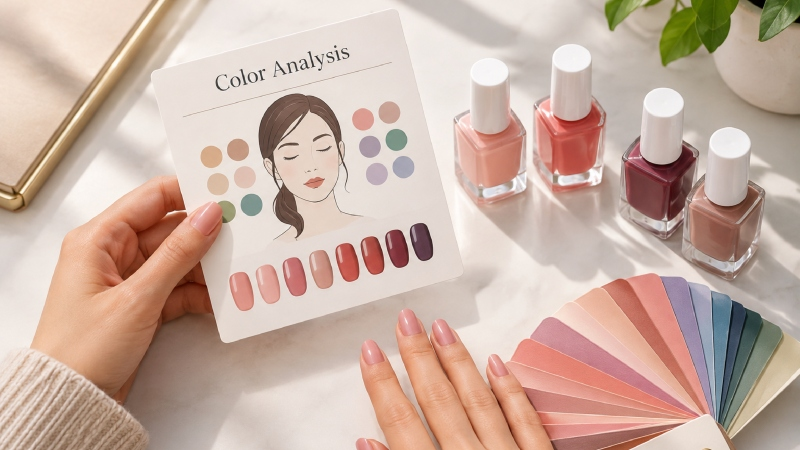
Choosing a nail polish color becomes easier when you understand which shades complement your natural coloring. A color analysis test helps identify colors that harmonize with your skin undertone, hair color, and eye color, providing a useful starting point for your next manicure.
Facefy offers a convenient way to explore personal color analysis and seasonal palettes. Whether you prefer understated nude nails, soft pastels, or bold statement colors, understanding your color season can help you narrow your choices.
What Is a Color Analysis Test?
A color analysis test examines your natural coloring to suggest shades that create visual harmony. Traditional seasonal color analysis divides palettes into four main categories: Spring, Summer, Autumn, and Winter.
More detailed systems expand these categories into 12 or 16 seasonal palettes based on temperature, depth, and brightness.
These characteristics can guide clothing, makeup, hair color, and nail polish selections. For manicures, skin undertone is particularly useful because nail polish sits directly against your hands. However, your overall seasonal palette can provide additional inspiration.
How to Take a Free Color Analysis Test
A digital color analysis assessment generally considers your skin tone, natural hair color, and eye color.
Step 1: Examine Your Natural Features
Start with a clear photograph taken in indirect natural daylight. Avoid beauty filters, harsh shadows, and colored lighting that might distort your complexion. If your hair is dyed, consider its natural color when evaluating your seasonal characteristics.
Step 2: Understand Your Skin Undertone
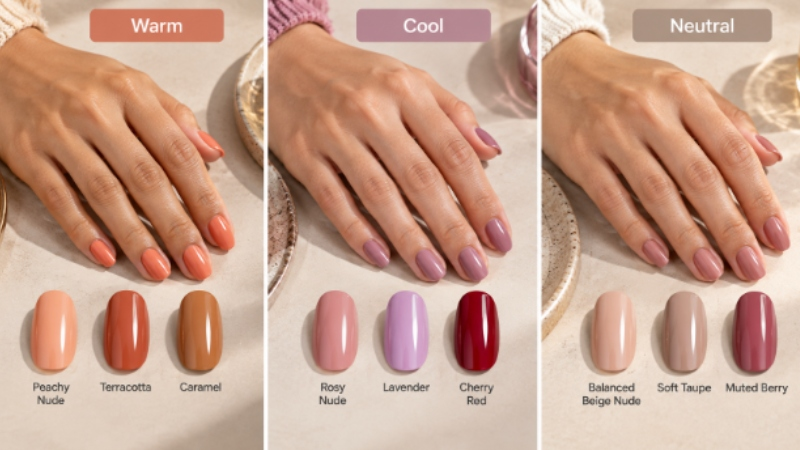
Undertones generally fall into three categories:
- Warm: Golden, peachy, or yellow-leaning characteristics.
- Cool: Pink, rosy, or bluish characteristics.
- Neutral: A combination of warm and cool qualities.
Olive skin may have warm, cool, or neutral undertones.
Step 3: Consider Color Depth and Brightness
Depth describes whether your natural coloring appears relatively light or dark. Brightness, also called chroma, describes whether vivid or muted colors tend to complement your appearance.
Someone with darker hair does not automatically belong to Winter. Undertone and contrast also matter.
Step 4: Explore Your Seasonal Palette
For a practical starting point, Facefy’s color analysis test helps you explore your natural coloring and potential seasonal palettes.
Its color analysis feature can provide useful direction when choosing nail polish shades that coordinate with your complexion and overall style.
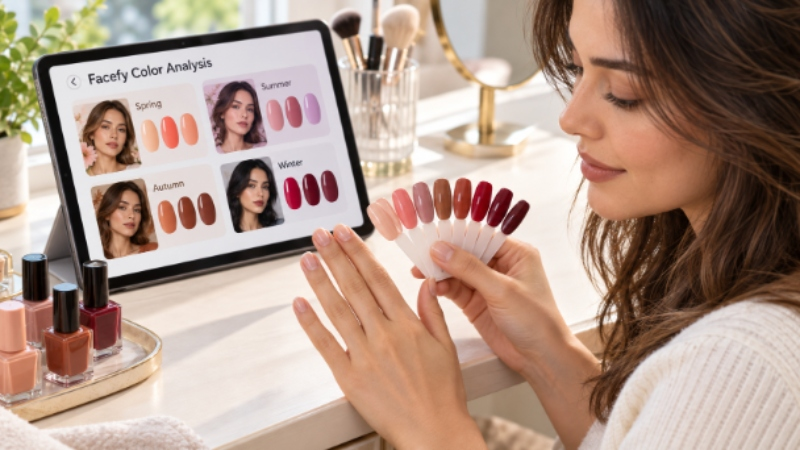
Treat digital results as suggestions, then compare actual polish colors against your hands in consistent lighting.
Understanding the Four Color Seasons
Each season represents a different combination of temperature, depth, and brightness.
Spring: Warm and Fresh
Spring palettes feature warm, clear colors such as peach, coral, golden yellow, and fresh green. For nail polish, consider peachy nude, warm coral, soft apricot, or cheerful turquoise.
Summer: Cool and Soft
Summer palettes emphasize cool, muted shades, including lavender, dusty rose, powder blue, and mauve. Flattering manicure options may include muted pink, cool beige, soft lilac, and dusty blue.
Autumn: Warm and Earthy
Autumn palettes include terracotta, olive, mustard, camel, and chocolate brown. Explore burnt orange, warm caramel, chocolate, cinnamon, or deep olive nail polish.
Winter: Cool and Defined
Winter palettes feature clear, contrasting shades such as cobalt, emerald, magenta, icy pink, and black. Nail polish options include cherry red, deep berry, cool burgundy, crisp white, and vivid jewel tones.
What Are the 12 Color Seasons?
The traditional four-season framework expands into more specific categories.
Spring: Light Spring, True Spring, and Bright Spring.
Summer: Light Summer, True Summer, and Soft Summer.
Autumn: Soft Autumn, True Autumn, and Deep Autumn.
Winter: Deep Winter, True Winter, and Bright Winter.
Some systems use Warm instead of True or Dark instead of Deep.
These distinctions help refine nail polish choices. For example, Soft Summer may favor muted mauve, while Bright Spring may prefer saturated coral. Deep Autumn might suit rich chocolate brown, whereas Light Spring may prefer delicate peach.
Color Theory Made Simple
Understanding three color characteristics makes nail polish selection easier.
Warm vs. Cool Colors
Warm shades often contain golden, peachy, orange, or yellow influences. Cool shades tend toward blue-based pinks, purples, and cooler reds. For example, tomato red generally appears warmer than blue-based cherry red.
Light vs. Deep Colors
Light shades include pale pink, cream, and delicate pastel colors. Deep shades include espresso, burgundy, forest green, and dark plum. Your preferred depth depends on your natural contrast and personal style.
Bright vs. Muted Colors
Bright colors appear clear and vivid, while muted colors look softer or slightly grayed. Electric blue has greater chroma than dusty blue. Neither is universally more flattering. Their effect depends on your coloring and the look you want.
Explore Your Personal Color Palette With Facefy
Facefy offers appearance-related tools for exploring personalized beauty insights, including seasonal color analysis. Its color analysis feature provides a helpful starting point for identifying color families that may complement your natural features. You can use these insights to coordinate nail polish with your favorite clothing, lipstick, accessories, and hair color.
This makes Facefy particularly useful when planning a cohesive beauty look or narrowing down manicure inspiration before your next salon visit. Digital recommendations remain estimates, so real-world color comparisons are valuable.
How to Choose Nail Polish for Your Skin Undertone
Nail Polish for Warm Undertones
Warm undertones often coordinate beautifully with peach, coral, terracotta, caramel, and warm red. Golden shimmer and bronze finishes can also create a harmonious appearance.
Nail Polish for Cool Undertones
Cool undertones may complement rosy nude, mauve, lavender, blue-based red, and cool berry. Silver shimmer and icy finishes offer additional options.
Nail Polish for Neutral Undertones
Neutral undertones can work with a broad range of colors. Try balanced nude, dusty rose, soft taupe, muted berry, or neutral red.
If your complexion has olive characteristics, experiment with warm brown, muted green, and carefully selected pinks. These recommendations are starting points rather than strict rules.
Building Your Personal Nail Polish Palette
A practical nail polish collection doesn’t require dozens of unrelated colors. Start with three groups.
Everyday Neutrals
Choose two or three versatile shades that coordinate with your wardrobe. Options include beige, pink nude, taupe, caramel, and soft brown.
Everyday Colors
Select shades you enjoy wearing regularly. A Soft Summer might prefer dusty rose, while a True Autumn may enjoy warm rust.
Statement Colors
Add a few bold shades for special occasions. Bright Spring may suit coral or turquoise, while Winter palettes can explore sapphire, ruby, or deep berry.
How to Match Nail Polish With Your Outfit
Your seasonal palette can help coordinate manicures with clothing. For a subtle appearance, choose nail polish from the same color family as your outfit.
For contrast, pair neutral clothing with a stronger accent color. A black dress might complement cool red or burgundy nails, while a cream outfit could work with peach or caramel.
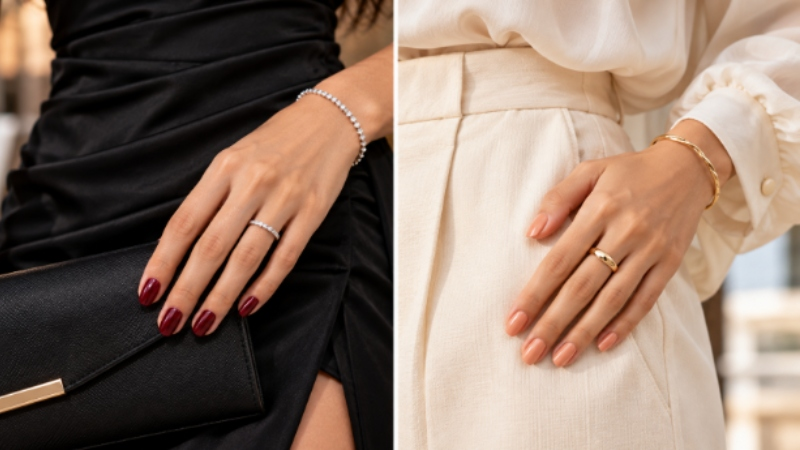
You can also coordinate polish with jewelry, handbags, or lipstick. Personal preference and the occasion remain important.
Photo-Based vs. Professional Color Analysis
Online assessments provide convenient access to seasonal color recommendations. However, camera white balance, exposure, makeup, and lighting can affect results. Professional color draping compares physical fabrics against your face under controlled conditions.
Neither method should be treated as an absolute rule for what colors you can wear. For nail polish, testing a small swatch against your skin often provides the clearest practical comparison.
Frequently Asked Questions
Can I Find My Color Season for Free?
Yes. Online color analysis tools and at-home fabric comparisons can help identify a likely season.
Does My Skin Tone Determine My Nail Polish Color?
Skin tone and undertone can guide your choices, but personal preference matters equally.
Can Neutral Undertones Wear Warm and Cool Polish?
Yes. Neutral undertones may complement colors from both temperature families.
Should Nail Polish Match My Seasonal Palette Exactly?
No. Seasonal palettes inspire, not restrictions.
Does Hair Color Affect My Nail Polish Choices?
Hair color influences your overall appearance and contrast, but it doesn’t automatically change your natural undertone.
Find Your Next Nail Polish Shade With Confidence
A color analysis test provides a practical way to explore nail polish colors that complement your natural appearance. By considering undertone, depth, brightness, and seasonal palettes, you can create a manicure collection that feels coordinated and personal. Use your results as inspiration, compare shades in natural light, and choose colors that make you feel confident.
Disclaimer: Color analysis results are estimates. Nail polish recommendations are for beauty inspiration only, and personal preferences may vary.

Erin Durkheim is an author and content contributor at Gingerbread Nails, covering nail designs, nail care, beauty tips, fashion, and product-related topics. She focuses on creating practical, easy-to-understand content that helps readers explore nail trends, care routines, and everyday beauty ideas.