
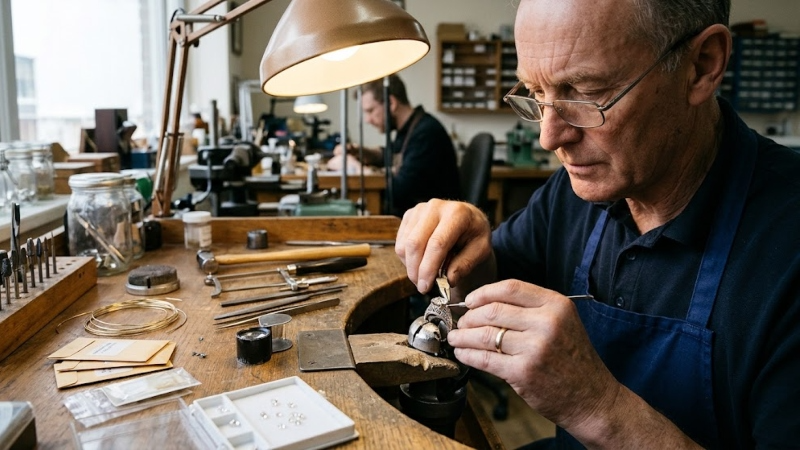
Jewelry damage ranges from broken chains and loose gemstones to worn settings and scratches. Experienced jewelers assess each piece’s construction, metal type, and condition before recommending suitable repairs. A careful examination helps identify damaged components while preserving original design details. Here are 4 things to know about the jewelry repair process:
1. Describe the Damage
Visible damage provides an initial indication of the work a piece requires. Broken chains, damaged clasps, and scratched surfaces involve different repair methods, while loose stones require attention to their settings. A ring that slips off easily also needs a fit assessment before resizing begins. The jewelry’s condition helps determine whether a simple repair or more extensive work is appropriate.
2. Assess Stone Settings
Gemstone settings hold stones in place, so worn prongs require attention during a repair assessment. Expert jewelers examine loose diamonds and colored gemstones to determine whether the surrounding metal still secures them properly, and whether they should repair them. Damaged tips and weakened prongs also affect how securely a stone sits within its setting.
The stone itself may require attention if its surface appears dull or if a gemstone is missing. Polishing addresses surface dullness, while replacement restores a missing stone when a suitable match is available. If the existing setting no longer suits the design, remounting offers another option for using the original gemstones.
3. Preserve Original Details
Antique and heirloom jewelry requires attention to its period-specific features during restoration. Worn prongs, damaged tips, and sizing changes need careful assessment so repairs do not unnecessarily alter the original design. The restoration approach also depends on the piece’s construction and the condition of its gemstones.
The following details help guide decisions about preserving an older piece:
- Original settings: Retain distinctive metalwork when its condition permits.
- Period details: Identify decorative features that reflect the piece’s age and design.
- Gemstone condition: Assess existing stones before polishing or replacement.
- Structural repairs: Address weakened prongs and damaged tips while preserving suitable original components.
- Resizing requirements: Evaluate how band alterations affect the original structure.
4. Select Repair Methods
Ring resizing adjusts a band to fit the wearer’s finger. A jeweler measures the metal and design prior to adjusting the ring to a different circumference. Bands with complicated detailing or more than one stone require careful examination of the design.
Chain and clasp repair corrects broken links, which can prevent a necklace or bracelet from fastening properly. If the chain is broken, you have to repair the broken link. The selection of the method is dependent on the extent of the damage and the surrounding metal.
Another repair concern for white gold jewelry is when it gets dull. Rhodium plating will give it a reflective white look again, and remounting will move any current gems to a new setting. Antique pieces may require restoration rather than standard repairs when preserving their original design is a priority.
Buy from Professional Jewelers
Jewelry also carries personal and family significance, making its history useful when planning restoration. Photographs of distinctive details help communicate the original appearance, especially when a piece has passed through several generations. Written notes about previous repairs also give the jeweler helpful context. Seek professional guidance from experienced jewelers to assess the damage and identify suitable repair methods for your piece.

Erin Durkheim is an author and content contributor at Gingerbread Nails, covering nail designs, nail care, beauty tips, fashion, and product-related topics. She focuses on creating practical, easy-to-understand content that helps readers explore nail trends, care routines, and everyday beauty ideas.