
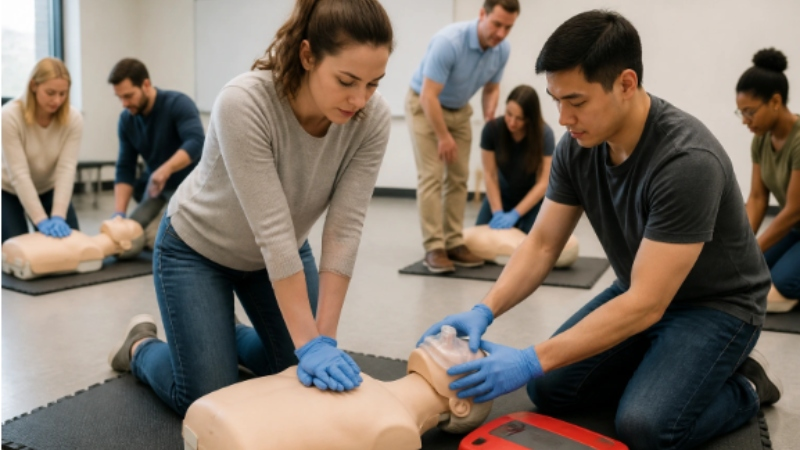
Nail salons look calm from the outside — soft lighting, quiet chatter, the steady hum of a filing tool. Step closer, though, and you’ll find sharp implements, chemical fumes, and clients sitting inches from your hands for thirty minutes at a stretch. That mix creates real risk, whether it’s a nicked cuticle that won’t stop bleeding or a client who reacts badly to acrylic fumes. It’s one reason more salon owners across Richmond Hill are looking into Coast2Coast CPR Training before something forces the issue. A little preparation now can spare your whole team a frightening scramble later.
Key Takeaways
- Nail salons face everyday risks: cuts, chemical reactions, fainting, and choking.
- Ontario’s OHSA and WSIB guidelines apply to salons like any other workplace with staff.
- Every minute without CPR or first aid lowers the odds of a good outcome.
- Blended learning lets a whole team get certified without closing the shop for a day.
- Consistent safety habits build client trust and can lower staff turnover.
Why Does Salon Work Carry Hidden Health Risks?
Think about a typical day at a nail bar. Techs handle cuticle nippers, electric files, and UV lamps, often working with acetone, primers, and gel top coats in a small, poorly ventilated room. Add long shifts on your feet and repetitive hand motions, and the risks add up fast. A slipped nipper can draw blood in seconds, chemical fumes can trigger headaches or allergic reactions, and some clients even faint during a long pedicure soak.
What Happens When a Client Has a Medical Emergency in Your Chair?
Picture this: a client suddenly goes pale, her hands go clammy, and she slumps in the pedicure chair. Do you know what to do in the next sixty seconds? Would your staff? Without training, most people freeze, and that hesitation costs time. A tech who recognizes fainting, manages a bleeding cut, or handles an allergic reaction can keep a bad moment from becoming dangerous.
Why Does Every Minute Without Help Matter?
The Heart and Stroke Foundation of Canada has long noted that survival odds from cardiac arrest drop quickly with every minute that passes before someone starts CPR and applies an AED. A salon isn’t a hospital, but a calm bystander who starts compressions right away can change the outcome. The same logic applies to smaller emergencies: quick action on heavy bleeding or a bad reaction buys precious time until help arrives.
What Does Ontario Law Require From Salon Owners?
Ontario workplaces fall under the Occupational Health and Safety Act, and WSIB guidelines expect employers to maintain adequate first aid coverage based on workforce size. A small salon might assume these rules only apply to factories or construction sites — they don’t. Any workplace with employees, including a nail bar or spa, must plan for medical emergencies and keep trained staff on hand.
The Association of Workers’ Compensation Boards of Canada notes that service-industry employers often underestimate their exposure to workplace injury claims. A cut that gets infected, or an unreported fall, can turn into a costly claim fast. Consistent first aid response protects your team and your business alike.
What Should Salon First Aid Training Actually Cover?
Good training for a salon should go beyond a generic office course. Look for a program covering situations your team will actually face:
- Minor and moderate cuts from tools and implements
- Skin and respiratory reactions to chemical exposure
- Fainting and dizziness, particularly after long soaks or standing
- Choking, which can happen if a client eats or drinks in the chair
- CPR and AED use for sudden cardiac emergencies
A well-rounded course also teaches when to call 911 versus when to manage a situation on-site.
How Does CPR Training Change the Way a Salon Runs?
Once a team completes proper training, something shifts. Staff stop dreading the “what if” scenarios and start feeling ready for them. Clients notice too — a salon that visibly invests in safety tends to build more trust over time.
Blended learning, mixing online theory with in-person skills practice, makes it realistic for a whole team to get certified without shutting down for a day. Turnover tends to drop too, since techs stick around longer where safety is taken seriously. If you want to see how the process works elsewhere, you can check out C2C First Aid & Aquatics for course details and scheduling options.
About Coast2Coast First Aid
Coast2Coast First Aid & Aquatics was founded in Toronto in 2014 and has held the Top 3 Canadian Red Cross Training Partner distinction for 2023, 2024, and 2025. As a Heart & Stroke accredited trainer, it has certified more than 150,000 students with a 99.9% success rate across 30+ locations in Canada and the United States. Certificates arrive digitally within 48 hours, and every student gets a free 90-day skills retake.
If you’re looking for first aid and CPR training near Church Street South and Major Mackenzie Drive, close to the Mackenzie Health Hospital area, or in the surrounding Richmond Hill neighbourhoods, you may reach out to the Coast2Coast team in that area.
FAQs
Do nail salons in Ontario legally need first aid training?
Yes. Under the Ontario Occupational Health and Safety Act, employers must keep the workplace safe, and WSIB guidelines call for adequate first aid coverage based on workforce size.
What is the most common emergency in a nail salon?
Minor cuts from tools like cuticle nippers are most frequent, followed by fainting during long soaks and reactions to fumes from acrylics, gels, or acetone.
How long does CPR and first aid certification take?
Many programs use a blended format: online theory at your own pace, plus a shorter in-person skills session, so a team can get certified without closing for a day.
Does a small salon really need CPR training, or just basic first aid?
Both matter. Basic first aid covers cuts, burns, and fainting, while CPR and AED training prepares your team for sudden cardiac emergencies.
How often should salon staff renew their certification?
Most certifications need renewal every three years, though this varies by provider. A calendar reminder helps make sure no one’s certification lapses.
This article is for general information only and isn’t medical, legal, or claims advice. Confirm specific workplace first aid obligations with Ontario’s OHSA and WSIB before finalizing a training plan.

Erin Durkheim is an author and content contributor at Gingerbread Nails, covering nail designs, nail care, beauty tips, fashion, and product-related topics. She focuses on creating practical, easy-to-understand content that helps readers explore nail trends, care routines, and everyday beauty ideas.