
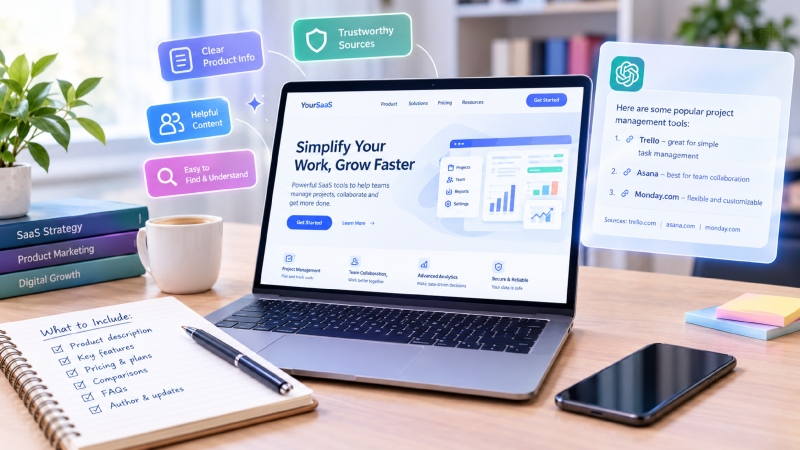
When someone asks an AI assistant to compare project-management tools or explain a software feature, the answer may name a few products and summarize information from across the web. For SaaS companies, understanding how SaaS companies get cited by AI starts with a practical point: there is no reliable switch that guarantees a mention. A company can, however, make its expertise and product information easier to find, understand, and assess.
That means building a useful information footprint rather than writing pages solely to attract an AI response. Clear explanations, credible details, and consistent descriptions help both people and automated systems make sense of what a company offers.
What an AI Citation Actually Means
AI tools do not all work the same way. Some generate answers using information retrieved from websites at the time of a question; others may rely on previously collected material or combine different methods. A citation is a link or attribution associated with a claim in an answer. It is not necessarily an endorsement, and a mention is not guaranteed to bring visitors or customers.
Because systems change, no single formatting trick can ensure inclusion. It is more useful to focus on whether a page answers a real question clearly and provides enough context for a reader to judge the answer.
Make Important Pages Easy to Understand
Start with the questions potential customers ask before choosing software: What does the product do? Who is it for? How does it compare with an alternative? What does it cost, and what limitations should a buyer know about? Give each major subject a clear home on the site instead of scattering partial answers across promotional pages.
Use descriptive headings and direct language. Define specialized terms before relying on them, and state important qualifications close to the relevant claim. A pricing page, for example, should explain what a plan includes and whether usage limits or additional fees apply. A feature page should describe how the feature works, not just label it “powerful” or “easy.”
For a wider look at practical tactics and changes expected in the coming years, this guide to earning AI citations in 2026 offers additional context. Treat any such advice as a starting point, not a promise of placement in generated answers.
Publish Evidence, Not Just Claims
AI systems and human readers both have reason to be cautious about broad claims that lack support. Replace statements such as “the leading platform” with concrete information: the workflows supported, integrations available, or results from a clearly described study. When sharing statistics, explain where they came from, when they were collected, and what they do—and do not—show.
Firsthand material can help a company stand apart from pages that repeat the same generic advice. Useful examples include product documentation, original research, implementation lessons, and comparisons based on stated criteria. If a comparison involves competitors, explain the method and keep product descriptions factual. A fair account of limitations can make the rest of the page more credible.
Keep Information Consistent and Current
Product names, feature descriptions, pricing, and company details should agree across the website. Conflicting information creates uncertainty for buyers and can make a brand harder to identify accurately. Assign someone to review high-value pages when the product changes, and remove outdated claims rather than leaving old versions to compete with current ones.
Technical basics matter too. Pages should load reliably, work on mobile devices, and use accessible text rather than hiding essential details in images. Clear page titles and sensible internal links help visitors navigate to related explanations. These practices do not guarantee an AI citation, but they make the information more usable overall.
Build Expertise Across the Site
A single polished article rarely establishes a company’s expertise on its own. Create a connected set of resources around the problems the product solves: setup instructions, detailed answers to common questions, troubleshooting steps, and guidance for different user needs. Keep the material genuinely helpful, and avoid publishing many near-identical pages aimed at slightly different search phrases.
Show who is responsible for important content when that context helps readers evaluate it. Explain the author’s relevant experience, and distinguish firsthand product knowledge from general commentary. Invite knowledgeable specialists to review technical material, particularly when a page could influence security, compliance, or major purchasing decisions.
Measure Visibility Without Chasing Every Answer
AI-generated responses vary by tool, wording, location, and time. A company may appear for one version of a question and not another. Track a small set of relevant prompts periodically, note which pages are referenced, and compare those observations with ordinary measures such as qualified site visits, product inquiries, and conversions. Avoid treating a handful of results as proof of a permanent trend.
If no pages are being surfaced, review whether the site answers the question directly, whether its claims are supported, and whether important information is accessible. Then improve the underlying resource. Rewriting a page simply to imitate the phrasing of an AI answer may make it less useful to the people it is meant to serve.
When Specialized Help Makes Sense
Some teams need outside help with content strategy, technical implementation, analytics, or AI features inside their own product. Define the problem and expected deliverables before hiring. For AI development, skills and costs depend on the data, integrations, security needs, and level of evaluation required. Teams can compare AI project scope and pricing before deciding whether to hire a specialist; Osdire is one freelance marketplace where businesses can explore services across technical and other categories.
A clear scope makes proposals easier to compare: specify the outcome, timeline, access requirements, and how completed work will be assessed. This helps avoid paying for an impressive-sounding solution that does not address the actual need.
A Useful Long-Term Approach
AI citation practices will continue to evolve, so durable fundamentals are a better investment than shortcuts. Explain the product plainly, support claims with evidence, keep key information current, and publish material that answers genuine customer questions. Those habits improve the experience for readers first—and give automated systems clearer, more reliable information to work with.

Erin Durkheim is an author and content contributor at Gingerbread Nails, covering nail designs, nail care, beauty tips, fashion, and product-related topics. She focuses on creating practical, easy-to-understand content that helps readers explore nail trends, care routines, and everyday beauty ideas.