
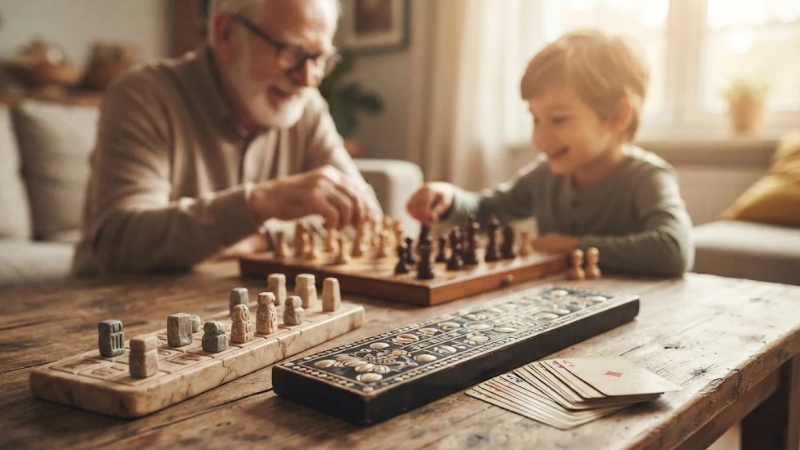
Long before smartphones, television, or even printed books became part of everyday life, people were finding ways to entertain themselves through games. Ancient civilizations gathered around boards carved from wood and stone, children invented competitions using ordinary objects, and families passed down rules that sometimes survived for hundreds of years. The equipment was often simple, but the enjoyment was familiar. People wanted to compete, solve problems, spend time together, and occasionally enjoy the satisfaction of winning.
What’s remarkable is how many traditional games have endured despite enormous changes in society. Chess remains popular centuries after its development, playing cards are still found in homes around the world, and familiar games such as checkers continue to entertain new generations. Their survival isn’t simply a matter of nostalgia. Traditional games satisfy human interests that technology hasn’t replaced, including curiosity, friendly competition, social connection, and the pleasure of learning something through experience.
The Ancient Origins of Playing Games
Archaeological discoveries suggest that games have been part of human societies for thousands of years. Ancient Egyptians played Senet, a board game represented in surviving artifacts and tomb paintings. Although the complete rules remain uncertain, its presence in Egyptian culture demonstrates that structured games were already important forms of recreation.
Another early example is the Royal Game of Ur, associated with ancient Mesopotamia. Archaeologists discovered beautifully decorated game boards dating to approximately 2600 BCE. Surviving evidence suggests that versions of the game involved moving pieces according to the results of throws, combining strategy with chance.
These early games served purposes beyond passing the time. Some carried religious or symbolic associations, while others provided entertainment and opportunities for social interaction.
The basic appeal remains recognizable today. Players follow shared rules, make decisions, and experience uncertainty about the outcome. That combination creates excitement even when the equipment consists of little more than a board and several pieces.
How Games Traveled Between Cultures
Traditional games rarely remained confined to the places where they originated. As people traveled for trade, migration, diplomacy, and exploration, they carried recreational customs with them. Rules changed as games moved between communities. Different cultures adapted playing pieces, introduced variations, and developed their own traditions.
Chess provides a particularly interesting example. Its early development is generally traced to the Indian game chaturanga, which emerged around the sixth century. Related forms spread into Persia and eventually reached other regions, including Europe.
Over time, the rules evolved. The modern movement of the queen and bishop, for example, developed much later than the game’s earliest forms. Yet the central idea survived. Two opponents compete using pieces with different abilities, attempting to outmaneuver one another. This ability to change without losing its identity helps explain why certain games remain popular across generations and geographic boundaries.
The Lasting Appeal of Chess
Chess has endured because it offers a remarkable amount of complexity within a relatively small set of rules. The board contains 64 squares, and each player begins with 16 pieces. Learning how the pieces move is manageable for many beginners, but mastering strategy can take years.
That balance between accessibility and depth is important. A new player can enjoy a casual match after learning the fundamentals, while experienced competitors can spend considerable time studying openings, tactics, and endgames.
Chess also creates opportunities for learning. Players practice planning, recognizing patterns, evaluating alternatives, and responding to unexpected decisions. However, the game’s popularity isn’t limited to its intellectual challenges. For many people, chess is a social activity. A regular match between friends or family members can become a familiar tradition, regardless of who wins.
Why Board Games Bring People Together
One reason traditional board games endure is that they encourage people to share an experience. Players gather around the same table, observe one another’s decisions, and react to the changing situation. A game of checkers might involve quiet concentration, while a family board game could produce laughter, playful arguments, and unexpected reversals.
Unlike many solitary activities, board games create a shared moment. They also provide structure for social interaction. People who might struggle to start a conversation can focus on the game itself. This can be particularly valuable during family gatherings, community events, or informal meetings between friends.
The rules establish a common activity, while individual personalities shape the experience. A familiar game can feel different each time because the people playing it bring different strategies, moods, and expectations.
The History and Versatility of Playing Cards
Playing cards have an especially interesting history because a relatively small collection of objects can support countless games. Early playing cards developed in China, with forms of card play documented centuries ago. Cards later spread through other regions, eventually becoming established in Europe during the late medieval period.
Different cultures developed distinct suits, designs, and rules. Today, a standard deck can be used for games involving memory, probability, strategy, or simple chance. Some card games are competitive, while others encourage cooperation or provide entertainment for a single player. This versatility helps explain their continued popularity.
A deck of cards is inexpensive, portable, and adaptable to different group sizes. Families can teach children simple matching games, while experienced players may enjoy more complicated strategic challenges. The same basic equipment can support years of entertainment.
Competition and the Appeal of Winning
Competition has always been an important part of gaming. People enjoy testing their abilities against others, whether they’re playing chess, throwing dice, or participating in a traditional sporting contest. Winning can provide satisfaction, but the uncertainty of the outcome often matters just as much. A close match creates anticipation. Players adjust their strategies, respond to setbacks, and sometimes surprise themselves.
Historically, certain games and competitions have also involved wagers or prizes. Today, discussions about games for money can include everything from organized skill-based tournaments with cash awards to activities involving gambling, although the legal and financial implications differ considerably.
It’s important to distinguish ordinary recreational competition from gambling and other financially risky activities. The enduring appeal of traditional games doesn’t depend on monetary rewards. For many players, the challenge, companionship, and enjoyment of participation are enough.
How Games Became Family Traditions
Many people learn their first games from parents, grandparents, siblings, or friends. A grandparent might teach a child how to play checkers, while family members introduce card games during holidays or vacations. These experiences often become associated with particular people and places. Years later, playing the same game can bring back memories of childhood afternoons, family gatherings, or friendly rivalries.
This emotional connection helps traditional games survive. The rules may be written down, but the experience of learning often happens through conversation and shared practice.
Older players pass along strategies, explain familiar customs, and sometimes introduce their own variations. Children eventually become the people teaching someone else. Through this process, games become part of family culture rather than simply objects stored in a cupboard.
The Importance of Simple Rules and Equipment
Traditional games often require very little equipment. A chess set, a deck of cards, or a board with movable pieces can provide hours of entertainment without needing electricity or an internet connection. This simplicity makes games relatively easy to preserve and share. Of course, accessibility varies. Some games require specialized equipment, considerable time, or advanced knowledge.
Still, many traditional activities can be adapted to different circumstances. Children might play a simplified version of a game before learning its complete rules. Families may modify the length of a match to suit younger participants. Simple equipment also allows games to travel.
People can bring a deck of cards on vacation, set up a board game at a community center, or play familiar games during gatherings. Convenience has contributed to their longevity.
Learning Through Play
Games provide opportunities to practice useful skills in an enjoyable environment. Some encourage counting and basic mathematics. Others involve memory, strategic planning, communication, or recognizing patterns.
For example, certain card games require players to remember which cards have appeared, while chess rewards attention to possible future moves.
However, games shouldn’t be treated as guaranteed methods of improving intelligence or academic performance. Their educational value depends on the activity, the individual, and the way the game is used. What makes games interesting is that learning often happens naturally through participation. A player may begin by making random decisions, then gradually recognize which approaches work better.
Mistakes become part of the experience rather than simply failures. This combination of entertainment and skill development can make games appealing to people at different stages of life.
How Traditional Games Adapted to Modern Technology
The arrival of computers and mobile devices didn’t eliminate traditional games. Instead, many familiar activities found new formats. Chess can now be played against computer programs or opponents in other countries. Digital versions of checkers and card games allow people to participate without owning physical equipment.
Online tutorials also make it easier to learn unfamiliar rules. However, digital versions change certain aspects of the experience. Playing against someone across the world offers convenience, but it doesn’t necessarily recreate the atmosphere of sitting together around a table.
Both formats have advantages. Physical games encourage face-to-face interaction, while digital versions can connect people who live far apart. The ability to exist in multiple formats has helped traditional games remain relevant.
The Role of Nostalgia in Gaming
Nostalgia plays a meaningful role in why people return to familiar games. A board game discovered in a childhood home may bring back memories of weekends spent with siblings. An old card game might remind someone of family vacations or evenings with friends.
These emotional associations can encourage people to introduce the same activities to younger generations. However, nostalgia alone cannot explain why traditional games survive. New players who have no personal connection to a game’s history can still find it entertaining.
A child learning chess for the first time may enjoy the challenge without knowing anything about its ancient origins. The combination of emotional familiarity and continuing entertainment gives traditional games an advantage. They appeal both to people remembering the past and to those discovering something new.
Why Traditional Games Remain Affordable Entertainment
Entertainment expenses can add up quickly, particularly for families looking for activities everyone can enjoy. Traditional games often provide a relatively affordable alternative to outings that require admission fees, travel, or recurring subscriptions.
A single board game may be played repeatedly over many years. A deck of cards can support numerous activities without additional purchases. This doesn’t mean every traditional game is inexpensive. Collectible sets and specialized equipment can cost considerably more.
However, many basic versions are widely accessible. Libraries, schools, and community organizations may also provide opportunities to play without purchasing equipment. The ability to enjoy repeated experiences with limited ongoing expenses contributes to the lasting appeal of these activities.
The Social Value of Friendly Rivalries
Friendly competition can strengthen relationships when participants approach it with respect. A regular chess match between neighbors or a weekly card game among friends provides a reason to spend time together.
These activities can create routines that people look forward to. Players may develop familiar strategies, remember memorable victories, and enjoy teasing one another about past results.
However, competition should remain enjoyable. Arguments over rules or excessive pressure to win can undermine the experience. Clear expectations and good sportsmanship help maintain a positive atmosphere.
The most memorable games aren’t always the ones someone wins. Sometimes, they’re the matches filled with laughter, surprising decisions, and conversations that continue long after the pieces have been put away.
Why Certain Games Outlast Changing Trends
Popular entertainment changes constantly. New technologies attract attention, cultural preferences shift, and activities that once seemed essential can gradually disappear. Traditional games survive because many of them offer something that remains valuable regardless of the era.
They combine recognizable rules with unpredictable outcomes. They can be learned, practiced, and shared. They also provide opportunities for personal achievement without requiring constant technological upgrades.
A chess match played today follows principles that would be recognizable to players from earlier generations, even though the surrounding world has changed dramatically. This continuity is unusual. The game remains familiar while each new match creates a different experience.
Keeping Traditional Games Alive for Future Generations
The survival of traditional games depends on people continuing to play them. Families can introduce children to familiar activities, schools can incorporate appropriate games into recreational programs, and community organizations can create opportunities for people to gather.
However, preserving games doesn’t mean refusing to adapt them. Different formats, accessible equipment, and new variations can help more people participate. The most important element is maintaining the enjoyment that made the activity popular in the first place.
Traditional games have endured because they offer a combination of challenge, connection, and entertainment that continues to resonate with people. Centuries may separate modern players from the people who first enjoyed these activities, but the excitement of a close match remains remarkably familiar.
As long as people enjoy learning rules, testing their skills, and sharing experiences, traditional games will continue finding a place in everyday life.

Erin Durkheim is an author and content contributor at Gingerbread Nails, covering nail designs, nail care, beauty tips, fashion, and product-related topics. She focuses on creating practical, easy-to-understand content that helps readers explore nail trends, care routines, and everyday beauty ideas.